
A Wrinkle in Stone
Rome once valued age and experience. Now it’s valued for them

The thing that strikes me most about many early Roman statues has nothing to do with their artistry or balance. It isn’t the grandeur. It’s not the symbols of power they display or the way subjects are posed.
It’s how damn unflattering they are.
These were rich and powerful men -- the highest echelon of Roman society -- and yet they are memorialized with sagging skin, hook noses, uneven features, tired expressions, and wrinkles from age, worry, and conflict.
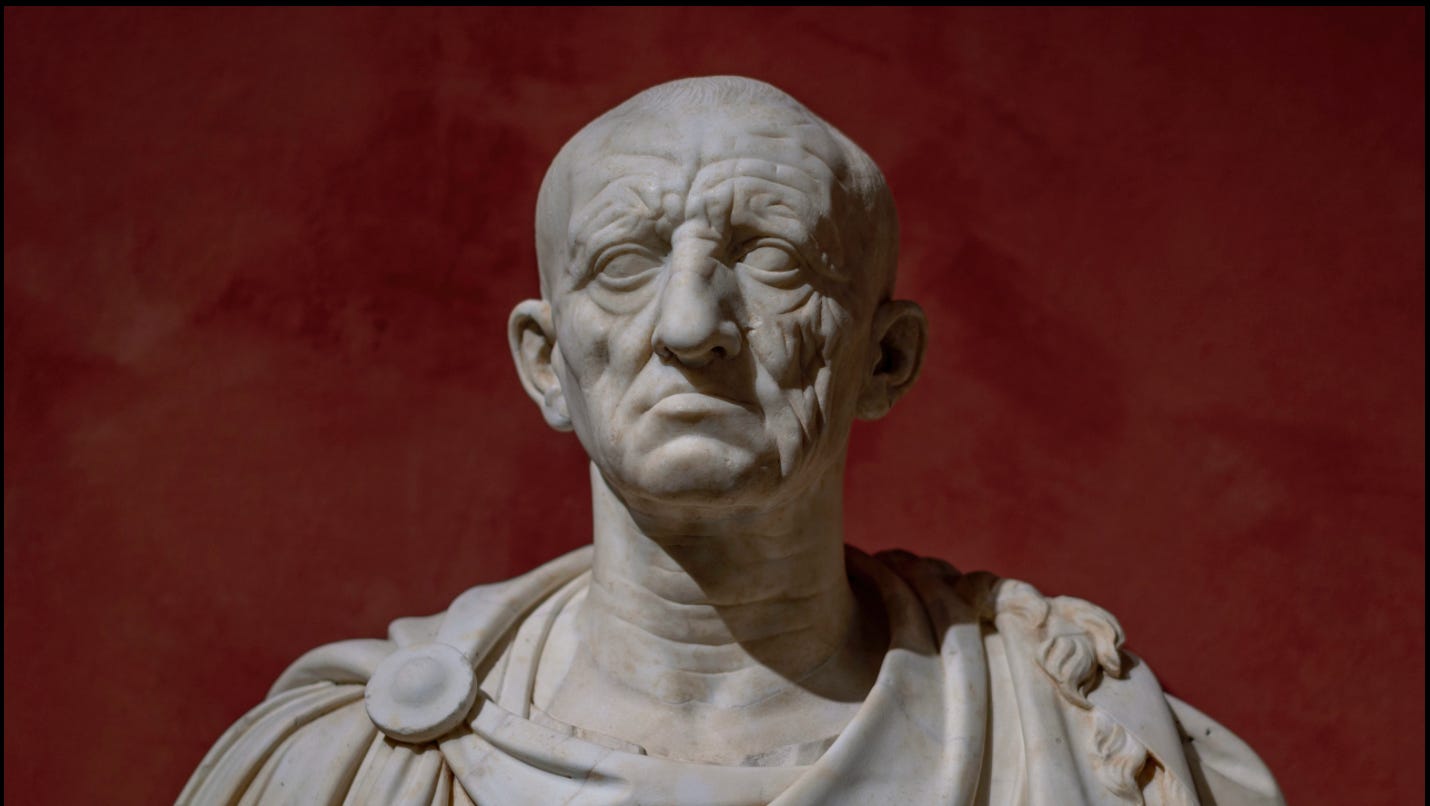
Some statues from the Roman Republic are so intensely veristic that modern-day doctors can knowledgeably speculate about the underlying health conditions of many of their subjects, recognizing scoliosis, goiters, and even neurological disorders.
Public life in the middle and late Republic must have seemed long and brutal. Influence wasn’t inherited neatly, and leaders were not yet claiming it by divine right. Power accumulated slowly: through service, survival, compromise, reputation. It was built with great effort over decades. And it showed.
Keep reading with a 7-day free trial
Subscribe to The ITALIAN DISPATCH By Eric J Lyman to keep reading this post and get 7 days of free access to the full post archives.