✍️ Dispatch: The Last Paparazzo?
An evening with Rino Barillari and the instincts that shaped celebrity culture
Having dinner with Rino Barillari feels like a full-immersion experience.
Over the course of an evening, the setting might change, but the atmosphere around him doesn’t. He doesn’t always answer the question he’s asked, but stories from his long career flow nonstop. Food and drink come in waves. Acquaintances drop by the table to shake his hand or exchange a few words.
Barillari, now 80, arrived in Rome from Calabria in 1959 and over the years the legendary paparazzo’s subjects have included -- among countless others -- Elizabeth Taylor and Richard Burton, Anita Ekberg and Marcello Mastroianni, Sean Connery, Paul Newman, Madonna, and Tom Cruise.
Yet the world Barillari and other paparazzi from the Golden Age of film helped make possible has mostly disappeared. There was a time when movie stars wandered through Roman piazzas and ate and drank at the same spots as shop keepers and cab drivers. But since then, the celebrity culture that once defined the Italian capital has fallen back behind the protection of bodyguards, locked gates, and PR agents.
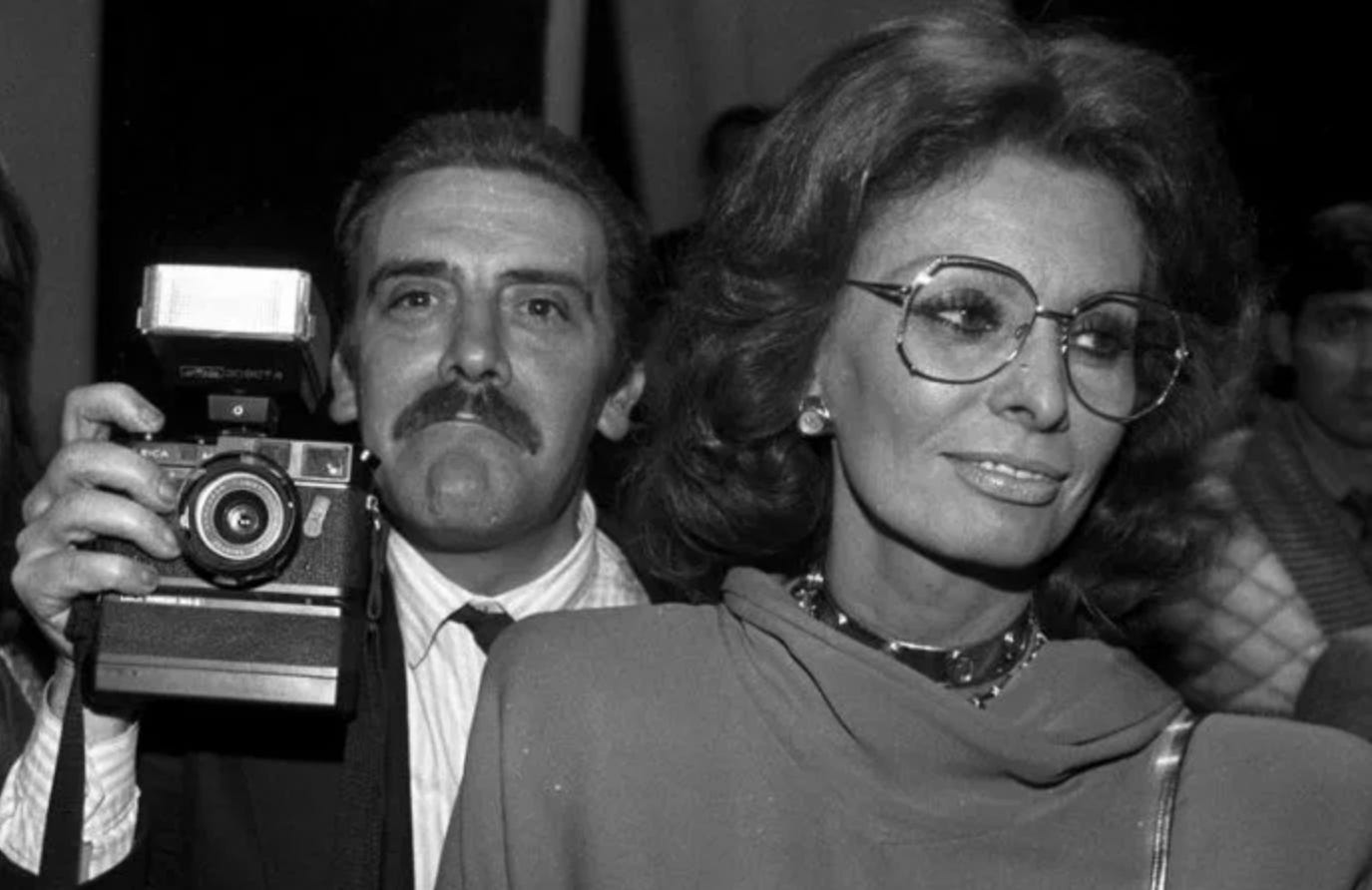
Before we met last week, I’d interviewed Barillari three times over the span of two decades: once each for United Press International, The Hollywood Reporter, and USA Today. Barillari hasn’t changed much over that span, but Rome has.
Back in 2007, he said he was among the last of the paparazzi “who remember the old way of doing things.” At the time, the claim sounded to me like hyperbole. But now it reads like a simple fact.
Digital cameras started to erode the system in which Barillari made his name, and it all but collapsed when everyone started carrying one of them. Modern phones turned bystanders into a would-be paparazzi, and after a while the value of the images themselves was cheapened. Some celebrities adapted, using lasers to disrupt autofocus. Others just disappeared from view.
“When I started working all the action was on Via Veneto, then it was Piazza di Spagna or Campo de’ Fiori, then maybe Parioli or Trastevere, or at film premieres,” Barillari said at dinner. “Now it’s in the outskirts, San Lorenzo, Testaccio. Now if they don’t want to be seen it’s all in private.”
Barillari said a photo didn’t have to be perfect to make an impact. “If it’s too clear, it looks posed,” he said. “It has to feel ‘stolen.’ But now, too many things are arranged and organized. The lighting has to be just right, the clothes just right.”
Barillari doesn’t measure his career by the number of photos he’s taken or in the years that have passed. He measures it in terms of damage.
Over the decades he estimates he’s been sent to the hospital around 200 times due to attacks by unwilling subjects. At least 80 of his cameras were destroyed by angry stars, politicians, or their bodyguards. In the early 2000s, he was run down by a car, an episode he still calls an “attempted homicide.” He walks with a limp due to his injuries. During the years of political terrorism in Italy, he even required bodyguards of his own.
Still, he said he’s never considered retirement. Even at 80, he loves the work. He clearly revels in his colorful past but says he’s always looking to tomorrow.
Asked who hit the hardest -- celebrities, politicians, or security personnel -- Barillari didn’t hesitate. “It’s the ones who need attention the most,” he said, whether it was because their careers were fading or because they never took off.
Professionally, he insists, there are no limits. He never asks permission. He walks in, takes the photo he wants, and walks out. “You might end up in the hospital, but you have to get the shot,” he said.
Did he ever refuse a shoot for ethical reasons? “The only shots I missed were the ones where the flash didn’t work,” he joked, though later he told me he had respectful agreements with some big stars, like Audrey Hepburn and Mastroianni. “I still took the photo, but if they asked me not to publish it, I might not.”
He’s more dismissive of modern celebrity culture. There are no real personaggi anymore, he said, with one exception: Lady Gaga. He said everyone else is too managed, scheduled, insulated, aloof. In other words: fame isn’t in the streets anymore, which means Rome can no longer be its natural stage.
I saw the tension first hand at the end of my evening with Barillari, when things moved from an osteria in Campo de’ Fiori to Harry’s Bar, back on Via Veneto, where everything started. Today, the walls of the famed Rome haunt are lined with Barillari’s photographs, making the front room there into something like a shrine.
I arrived there a few minutes after Barillari and his wife, Antonella, who were seated with four friends beneath a mounted photo montage that identified Barillari as “The King of Paparazzi.” A waiter tried to block me from approaching the table to protect the party’s privacy.
Barillari is always scanning the room, glancing at each new person who walked in. When he saw me, he stood up and waved me over. He called me his caro amico americano.
The drinks were flowing -- wine, champagne with ice, spritzes, of course a grappa for me -- when an ambulance screeched to a stop across the street, lights flashing. Barillari reacted instantly. He reached into a bag near his feet and pulled out a hefty Nikon with a big lens. Before I realized what was happening, he was already crossing the road. I followed.
A pedestrian tried to hold Barillari back from getting too close, but he pushed through. The medical technicians turned their backs on him to block his view. One of them shouted that he didn’t belong there. But he got the shot he wanted. To me, the whole thing felt less like a transgression than a reflex.
Back at the bar, I asked if he knew who the man was. “No idea,” he said, straightening his tie. “If he’s someone famous, we’ll find out tomorrow.”
Note: all photos are courtesy of Rino Barillari’s archives
This is the fourth Dispatch post in this newsletter. It’s a little more substantial than the previous three since it comes before a two-week break for the holidays. Starting again in 2026, these shorter pieces will appear every other Tuesday, in the weeks between the long-form features. Think of the Dispatch posts as snapshots with context: glimpses of places, traditions, curiosities, or reflections that still aim to shed light on Italy beyond the usual stereotypes.


Eric, this is a terrific story! I must say I am unable to completely relate to someone who willingly puts themself in harms way. I attended a Secchiaroli show in Milano recently, and I spoke to the galleriest about the work and the archive. It was definitely a different time. When Cinecitta ruled, everyone was in Rome. Must have been a fun time.....
It would have been a cool time to be in Rome in the 1950's and 1960's, right? I mean, at least if you had money and access.