✍️ Dispatch: Rome in One Day?
A serious answer to the wrong question
Rome doesn’t make it easy for people -- visitors, especially -- in a hurry.
It’s more than a question of crowds and geography. Entire centuries sit on top one another without explanation. The city’s rules and customs are unwritten, knowable only to those with curiosity and patience. There are no good shortcuts.
I think cities like Rome aren’t meant to be consumed; they’re meant to be absorbed over time.
I consistently advise people coming to Italy to do less. My commentary, In Praise of Doing Nothing -- one of my personal favorites from this newsletter -- was written in part for would-be tourists with four-cities-in-seven-days itineraries that are exhausting even to read.
Yet the question doesn’t go away. How do you experience Rome in a few days? In a single day? An afternoon?
So, for the sake of argument, I’m going to take these unfortunate questions seriously. Not because I think they’re good questions, but because they’re unavoidable.
(Before I answer, I’m curious what readers who know the Eternal City would suggest. If someone insisted on experiencing Rome from one place, where would you send them? Let me know in the comments.)
I’ll tell you some of the places I considered for this: Via della Conciliazione, with its breathtaking view of St. Peter’s Basilica in front and Castel Sant’Angelo behind; the Gianicolo, with a view of Rome so spectacular it killed a man in the opening scene of Oscar-winner La Grande Bellezza; the Giardino degli Aranci on the Aventine Hill, with its postcard view of the Tiber and into the city; and the Terrazza del Pincio in the Borghese Gardens, where Rome is spread out in one long, legible panorama.
But my pick is the Capitoline Hill.
It’s attractive, though not Rome’s most beautiful vantage point by any stretch. But I chose it because it explains more.
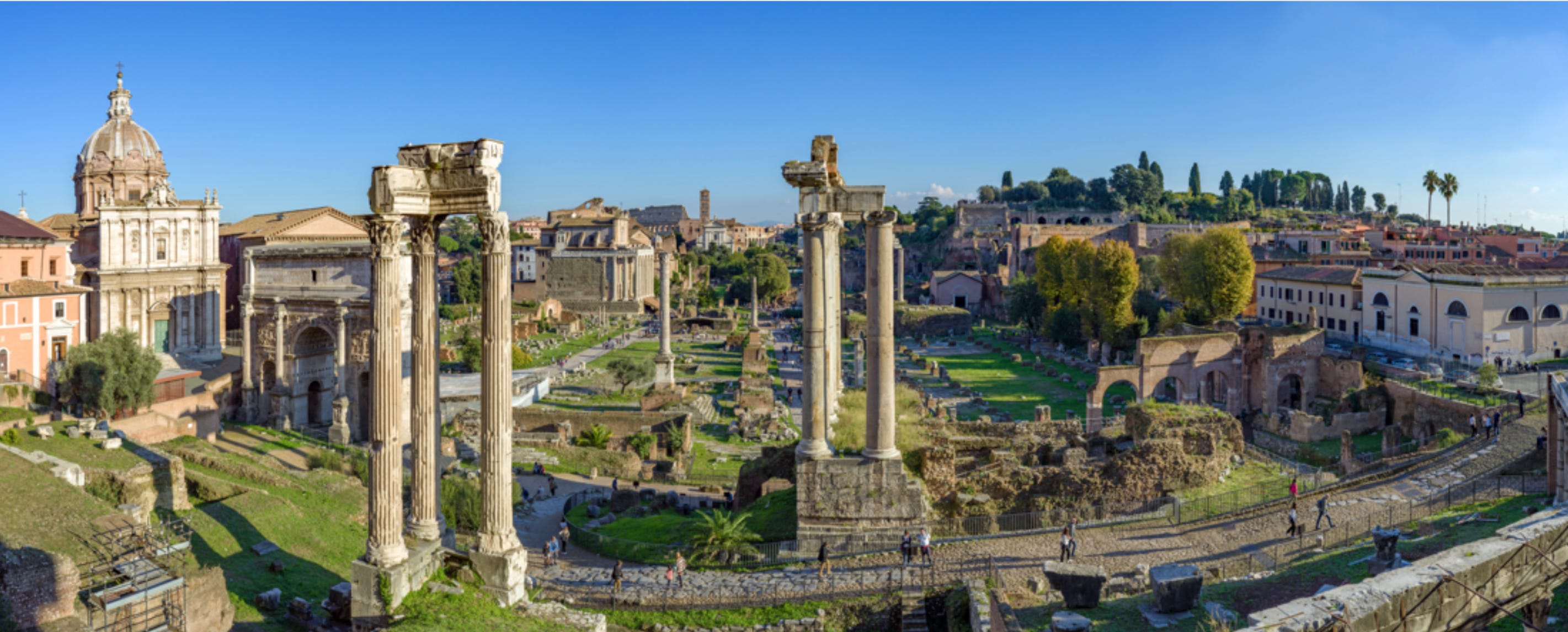
On one side, the view is of the Roman Forum and the Colosseum: pagan, imperial, ruined. On the other, the medieval and modern city: messy, confusing, alive.
In other words, I think the Capitoline Hill is to Rome what Rome is to Italy, and what Italy is to Europe: an accumulation of stories and contradictions that can only make sense in context.
The Capitoline is the only place where every era of the city’s history is visible. Not sequentially, but simultaneously.
The hill was settled by the Etruscans -- Rome before Rome -- and just across there’s the Palatine Hill, where legend says Rome was founded by Romulus and Remus in 753 BC. In between the hills lies the Forum, the heart of the Roman Republic, and beyond that, the Colosseum, the most recognizable monument of Imperial Rome. Nearby is the Mamertine Prison, which tradition says held Saints Peter and Paul, among the city’s most important Early Christian-era memories.
Medieval Rome survives in the interior of Santa Maria in Aracoeli, while the Renaissance is there in Michelangelo’s dramatic redesign of the Piazza del Campidoglio. The Capitoline Museums overflow with masterpieces from Baroque Rome, and Enlightenment Rome appears almost by accident: while listening to friars at Aracoeli in 1764, Edward Gibbon conceived The Decline and Fall of the Roman Empire, an early attempt to explain Rome’s collapse through evidence instead of legend.
Post-unification Rome is present in the massive Vittoriano monument on Piazza Venezia, and Fascist Rome with all that was destroyed to construct Via dei Fori Imperiali, carved through earlier layers so Benito Mussolini could stage military parades with the Colosseum as a backdrop.
And now Modern Rome has added itself with the stunning new Colosseo Metro station, opened last month after more than a decade of excavations.
Along the way, very little was replaced. It accumulated.
I lived near the Capitoline Hill for many years, just off Via di San Teodoro. It was so much a part of the daily routine for my dog, Mocha that even now, three years after moving away, she still pulls on her leash when we pass by. It usually doesn’t take much for her to convince me to return.
Mocha isn’t much of a history buff. But when I take people to the Capitoline, there’s one thing I always point out: the church of San Lorenzo in Miranda. It’s a Baroque church built within the confines of a second-century Roman temple that was dedicated to Emperor Antoninus Pius and his wife Faustina.

At the back of the church, there’s a door that leads to nothing. Open it and you’d fall four meters to the ground below.
It’s not there by mistake. When the church was completed in 1614, that was ground level. It’s on the same level as the road in front of the church and as the ones where I used to live on the opposite side. What we see of the Forum today only appeared after excavations starting in the late 18th century.
I think visualizing that drop goes a long way toward explaining Rome -- especially to someone in a hurry.
These shorter Dispatch pieces appear every other Tuesday, in the weeks between the long-form features. Come back next week for another full essay.


I've had to take friends and my mother through Rome in anywhere from an afternoon to 3 days. I remember when I took a friend through Rome in an afternoon and I was the guide, it was a walking tour to the big places, the been there, done that kind of tour; which isn't my groove, but like you said, the question still comes up and that's what she wanted to do.
What does someone want to get out of it beyond, the been there done that mentality? I'm content these days to unpack the bag once and just hang out in Testaccio, walk the Tiber each morning and pick a different route on the way back. Get a coffee standing up, a shaved iced in hot weather, shop at the market, drink a Peroni in the afternoon outside, never have to drive a vehicle. Find a new place to eat, drink.
Thanks for advocating for mindful tourism, so critical. I'd love to hear Mocha's perspective about her favorite Rome walks, too!
Campidoglio is a great pick, Eric! It reminds me of the first time I visited Rome, I was with my aunt. In the 90s. The very moment we got there, she immediately was asked if she spoke English, which she did really well as she worked as an executive for an American company back then. It turned out they urgently needed an English - Italian translator for a wedding that was about to take place in Campidoglio, as the official interpreter wasn't there yet and they were terribly late with the ceremony. So I happened to go to an English wedding in Campidoglio! With my aunt celebrating. In my tourist clothes.