✍️ The Questions I Didn’t Prepare For
Monarchy, relationships, and a bullet: one evening in Florence
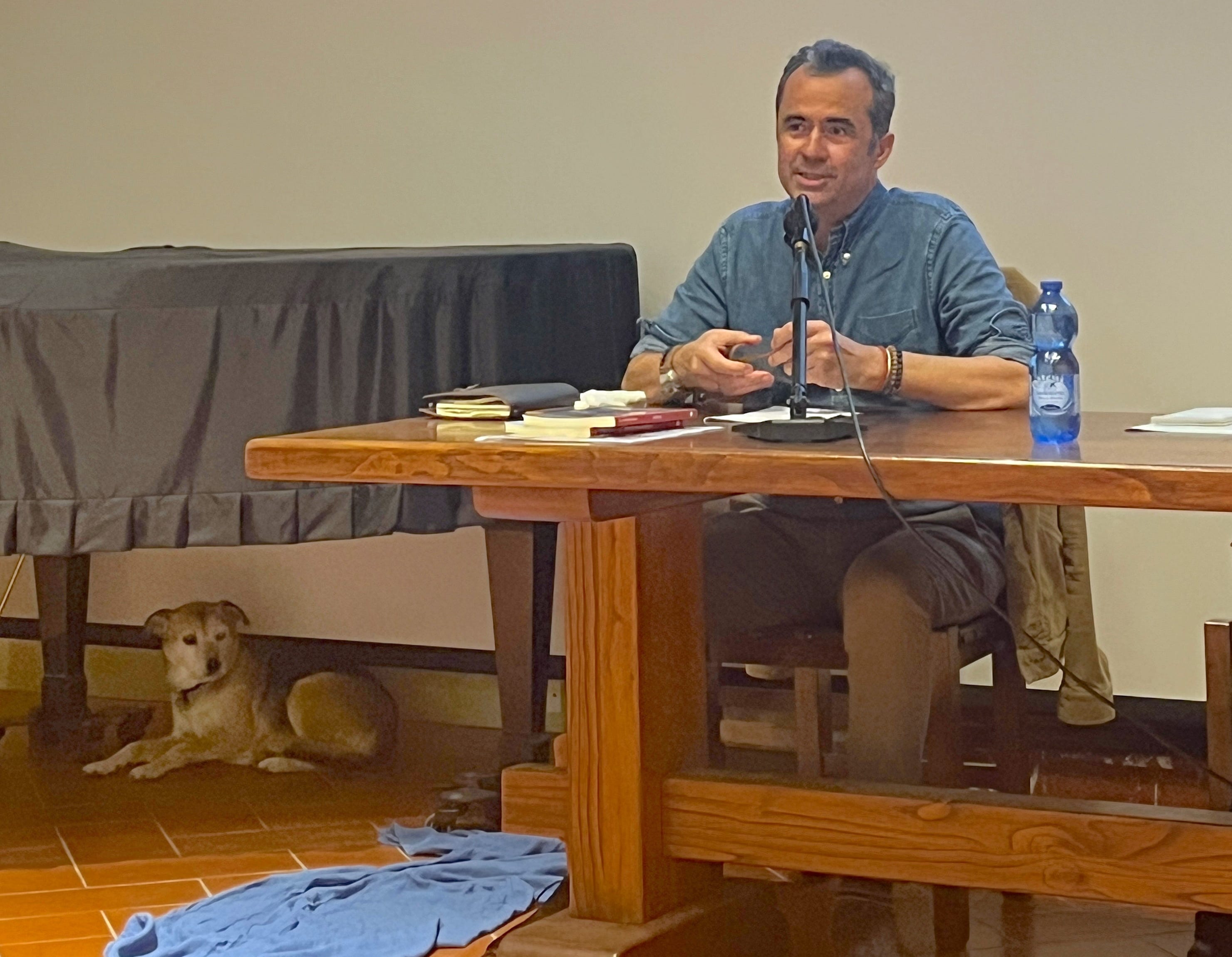
I recently spoke at a university campus in Florence prepared to discuss Italy’s unwritten rules -- the subtle codes and conventions that make daily life in Italy both maddening and legible. They’ve become a central theme of the Dispatch.
My prepared notes covered territory well known to readers of this newsletter: nostalgia for a version of Italy that is slowly fading, for example, or why the neighborhood barista can be the one who decides who really fits in. But many of the questions that surfaced after my remarks -- mostly Kent State University study abroad students -- tugged me in a different direction, toward points I hadn’t prepared for.
One student asked why southern Italy remains less developed than the industrialized north. I found myself reaching back to a book I read at his age, Tocqueville’s Democracy in America: in the U.S., authority rose up from communities; in Italy and most of Europe, it descended from monarchs and was only grudgingly parceled out.
“Look at the 1946 referendum when Italians chose between remaining monarchy and becoming a republic,” I said. “The north voted overwhelmingly for a republic. The south wanted to keep the king.
“Now take a color-coded map showing how each region voted and lay it over a map of economic development today. The areas that wanted to keep the king almost perfectly match areas with high youth unemployment, low innovation, and high emigration.”
Tino Masecchia, a Canadian-Italian who returned to Italy as an adult, spoke about the difficulties of adapting to a different culture and asked if I had any advice for those who were struggling.
“I had a writing professor in college who said that the people who succeed as writers aren’t necessarily the most talented,” I said. “They’re the ones who don’t give up. He said you shouldn’t even try to be a writer unless you find it impossible to do anything else.
“I think it’s the same with Italy. It’s difficult and sometimes it seems the country conspires against you. But if you can’t imagine yourself anywhere else, then you put your head down and move forward.”
Fabio Corsini, one of the Kent State organizers, pressed for a yes-or-no answer on whether I loved Italy. But I’m not good with one-word answers. I hesitated.
“Yes,” I finally said. “But it’s like any long-term relationship. We fight sometimes, but we always make up. I do my best to see Italy clearly, and with great affection.”
Anna Gravina, another organizer, noted that most of the students would head home in a few weeks, and asked what I’d suggest they take with them.
I said that beyond the obvious -- a sharper eye for beauty and a different sense of time and balance -- I thought they should find one important object to take with them, something physical that would return them to this place and time.
Then I reached into my pocket and held up my keychain. There’s a bullet on it, one I picked up off a street in Sarajevo, where I lived and worked during the Yugoslav wars in the early 1990s. It’s the only thing I still own from that time. It still gives me goosebumps.
The circumstances were different, I allowed. But the principle holds.
Find your version of that.
Nota bene: If this felt like something worth holding onto, there’s more where it came from. A paid subscription unlocks the full archive (47 essays and counting) and supports The Italian Dispatch. More info here.


“It’s difficult and sometimes it seems the country conspires against you. But if you can’t imagine yourself anywhere else, then you put your head down and move forward.”
The story of our lives. Saturday I told the lady at the TIM store I was going to jump off the bridge into the river after a a frustrating situation. 😅 Thankfully we both laughed and I moved on, head down.
Mocha!
On the front page it looks like bullet is pointed at the skull and beneath are the Mafia guys. I think I saw that movie.