Two Countries, One Warning
A visit to my mother’s homeland made me worry more about Italy’s burgeoning tourist economy
The Best Angle for a Photo
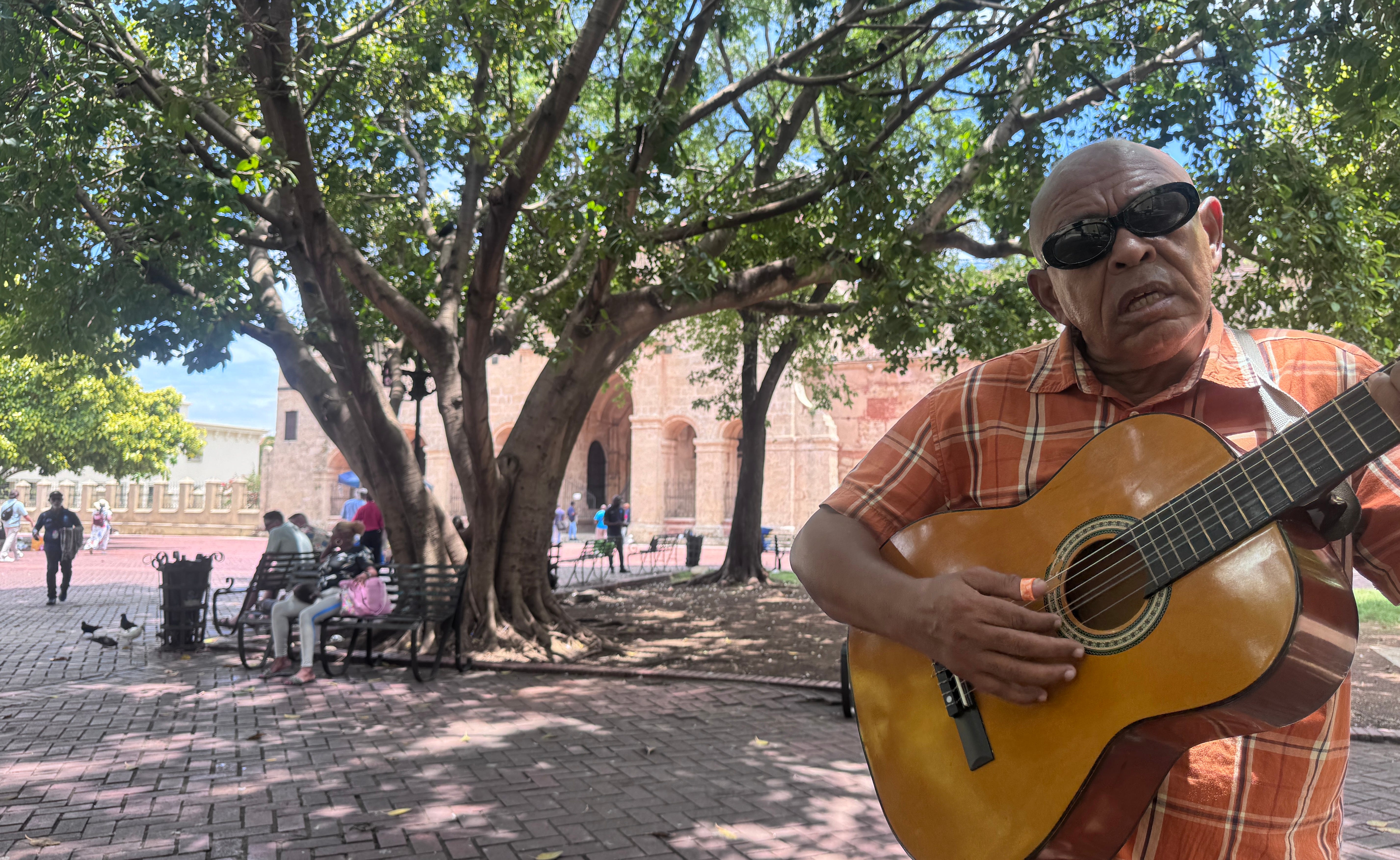
The musicians outside the Cathedral weren’t bad. Then again, they play the same few songs over and over, every afternoon.
I picked a park bench under the trees and facing the 500-year-old church and helped my elderly mother sit. It was late April, and the shade and a modest breeze helped make the midday sun bearable. It didn’t take more than a couple of minutes before one of the musicians strolled over to us and started crooning.
Bésame!
Bésame mucho!
Como si fuera esta noche
La última vez!1
This is my mother, I wanted to tell him. But instead, when he finished, I gave him 20 pesos and a smile. His expression was unchanged as he drifted toward the side of the plaza where a white tourist train waited to fill up.
A few minutes later, the tourist train lurched forward and then disappeared around a corner to wind through the narrow streets past well-preserved Colonial-era buildings and dozens of kitschy souvenir shops selling off-brand rum and second-tier cigars, along with the usual magnets, pins, tee-shirts, and shot glasses, all bearing the Dominican flag.
Inside the Cathedral Primada de América -- free for Dominicans; a small fee for visitors -- the heat and clatter of the colonial zone faded. The bright afternoon light was softer inside, filtered through stained glass. Instead of marble, the Gothic interior is coral and stone, but the atmosphere would feel familiar to anyone who knows European churches.
Back outside, the noise returned.
“The Cathedral is the oldest Christian church in the Americas,” a tour guide droned into a bullhorn. “This is the best angle for a photo.” A group of around two-dozen sunburned visitors held up their phones and momentarily reduced five centuries of history to a backdrop.
The Curse of Punta Cana
I visited the country often as a kid, back when Santo Domingo had the only commercial airport in the country. Now there are eight, and one of them -- near the Punta Cana resort town on the eastern tip of the country -- handles more traffic every year than the other seven combined. The Las Américas International Airport that serves the capital, among the first modern airports in the Caribbean, is almost an afterthought.
Compared to its peers in the region, the Dominican economy is stable and growing at a healthy clip. But sadly, most of that growth flows around ordinary Dominicans, not through them.
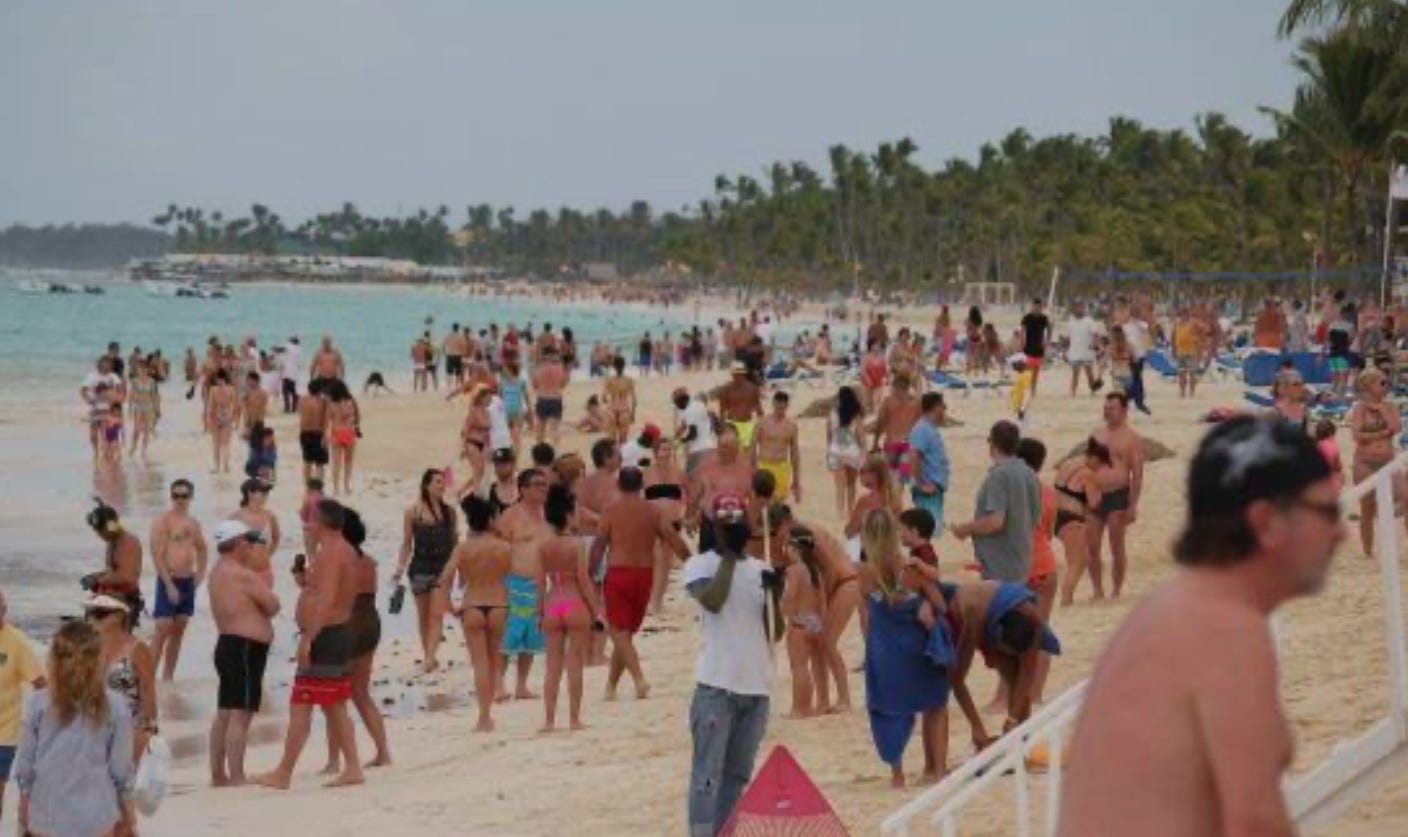
Punta Cana is less than three hours from the capital by car, but it’s like a different planet.
Every year, it receives around 11 million visitors -- roughly equivalent to the population of the entire country. They’re drawn by the turquoise water off its beaches, a dozen manicured golf courses, pulsating dance clubs, and all-inclusive resorts, where visitors can eat, drink, swim, and tan without ever venturing off the property. The dominant language is English, not Spanish, and aside from resort staffers and shopkeepers, there are few locals to be found.
I haven’t been there in years, but I can imagine it clearly. Why? Because I’ve been to Italy’s Amalfi Coast, to St. Mark’s Square in Venice, to Cinque Terre in high season.
The Dominican Republic has effectively split into two countries: one built for visitors, and one for everyone else. They rarely intersect.
Italy isn’t there yet. But the direction it’s heading is clear.
The Young American
My first long-term apartment in Rome was just off Via di San Teodoro, in an area that at the time was a thriving, self-contained little community. There was a neighborhood osteria, a butcher, a fruit seller, a small wine shop, a few coffee bars, a furniture repairer, and plenty of residents who’d been in the area for generations.
I was known there as Il Giovane Americano -- The Young American -- because I was the second American to live in the neighborhood, arriving more than two decades after Il Vecchio Americano, who’d arrived after he married a local.
But now, when I go back, there’s little of the old neighborhood remaining. What’s left lingers like a distant, familiar smell.
Like many areas of Rome -- the Jewish Ghetto, parts of Trastevere, Monti, Borgo Pio are at the forefront -- it’s being hollowed out by the spread of B&Bs, souvenir shops, and mini-markets. They’re becoming Rome’s version of the colonial zone in Santo Domingo with its strolling crooners.
And other parts of the country -- we can all name a few -- have become Italy’s version of Punta Cana.
Most of both countries remains unspoiled and genuine, but the balance is shifting -- slowly in some places, all at once in others.
These transformations hurt everyone involved. The locals are pushed out by rising prices and a declining quality of life as their neighborhoods evolve into stage sets. And visitors take over without realizing that the “authentic” experience they want has been replaced by a caricature.
Not a Tourist in the Building
My mother helps support an orphanage in the Dominican Republic, near a town called Bonao. Like Punta Cana, Bonao is within easy driving distance -- but in the opposite direction. It’s part of the country resort visitors don’t see.
Traffic thinned after leaving Santo Domingo. Soon, we were amid rolling green hills punctuated by farms and roadside communities with rustic corner stores, houses with tin or palm frond roofs, and, occasionally, a small church. People were transporting their wares -- coconuts, mangos, avocados, pineapples -- by bike, motorcycle, or donkey. Locals sat in loose circles of plastic chairs, playing cards or dominoes.
It was my first visit to the orphanage, which is small, modest, neat. There are 21 girls between the ages of four and 14 living there, along with three nuns. The tiny chapel on the grounds is dedicated to Francis of Assisi, the medieval mystic and saint from what is now Umbria.
Earlier that day, I stopped with my mother and two cousins at Tipico Bonao, a much-loved local restaurant that served what for me was the best meal I’d had on the entire trip: expertly prepared plantains, fried yuca, rice and beans, local cuts of beef, summer soups.
As I ate, I kept thinking of people I know from Italy, from Florida, and from other parts, who’d I be thrilled to take for a meal there. But that wasn’t just because of the good food. It was also because it didn’t seem like there was a tourist in the building.
📌 And another thing
When I arrived in the Dominican Republic on this latest trip I didn’t intend to write about it in The Italian Dispatch. Aside from Christopher Columbus -- the Genoese sailor who planted the Spanish flag on the island’s shores more than 500 years ago -- what connection was there to Italy?
But a few days into this trip, after a visit to the Zona Colonial and a few conversations with friends and relatives about the country’s resort enclaves, the idea for the main essay came into focus.
But even before that, a grittier similarity emerged: bureaucracy.
The main reason for this trip was to accompany my elderly Dominican-born mother from her home in Florida, her first visit back in four years.
But there was a secondary objective: to make progress on the long, drawn-out process of becoming a Dominican citizen. The hitch seemed minor: the U.S. registrar who recorded my birth certificate misspelled my mother’s middle name. I have a formal U.S. document correcting the error. The challenge was to convince the Dominicans to accept the correction.

Luckily, a cousin had gone through something similar and pointed me in the right direction. But I handled most of it myself. I didn’t expect things to move quickly -- and they didn’t.
The offices were crowded, disorganized. Bachata blared from TVs showing music videos, and people swayed to the rhythm in their chairs. Two weary dogs slept near a doorway. An old woman made her rounds selling fried snacks.
I came prepared for a long afternoon: I brought a book, headphones, a thermos of water, and a small bag of mixed nuts. I carried pesos in small denominations in case they didn’t have change. Under my arm: a thick folder with original documents, passport photos, receipts, all in duplicate.
Four different offices in six hours, the third one a 25-minute drive away. Then, back at the main office, where a contradiction emerged. I was about to be added to the system: I just needed to pay a small fee. But I couldn’t pay the fee myself because I wasn’t in the system.
I started thinking about which cousin could make it there before closing. Then I noticed a kind-faced middle-aged woman sitting across from me, knitting. I leaned over and tapped her on the shoulder.
Señora, necesito su ayuda -- “Ma’am, I need your help.” The Spanish-language version of a phrase I’ve used many times in Rome.
The woman studied my face as I explained the situation and then suddenly stood up and took me by the elbow. We pushed to the front of the line, where she said a few high-pitched words to the clerk behind the plexiglass window. She gestured toward me, then looked up toward the heavens as if to ask for help. The clerk chuckled, told some others to step aside, and let me know how much I owed.
I had the exact change. My many experiences with Italian bureaucracy prepared me well.
Nota bene: A paid subscription is the locals-only section of The Italian Dispatch. Access the full archive: now up to 50 essays and counting. Click here for more information on how you can help keep the newsletter sustainable.
Kiss me!
Kiss me a lot!
As if tonight
were the last time!
Bésame mucho is a 1940s classic written and recorded by Mexican singer Consuelo Velázquez and covered by many dozens of artists over the years, ranging from The Beatles to Elvis, from Frank Sinatra to Andrea Bocelli, and from Nat King Cole to the guy in the Zona Colonial.
P.S. I promise the lyrics sound much better in Spanish.


With overtourism and gentrification I always wonder about possible solutions look like and what case studies exist where cities have managed to redirect wealth to the people who live there. To me it seems like a combination of regulatory solutions (tax policies, incentives for people to live in a neighborhood or start businesses, etc) and promotion of responsible tourism (or civic engagement if you’re a transplant), like participating in community activities, supporting affordable housing, buying from local family-owned businesses. I think in general a lot of the commentary (not this newsletter, but a lot of others) leans heavily on individual actions or spotlights the ugliness of irresponsible tourists, because policy change seems so hard to achieve. No novel ideas here, but I’m a dual citizen who just moved back to Italy from the US and I’ve been trying to learn more about how I can engage my new community, neighborhood, etc and how to avoid inadvertently harming it. Appreciate your writing and reflections on the country and these issues!
Wonderful story. And I think you really hit on something significant: it's one thing for a country to develop its tourism industry, it's quite another to make a tourist economy actually work for the country itself. I'm always struck in Rome by how few Romans actually work in the tourist-driven businesses-- the parents or grandparents may own the business, but most of this generation wind up moving to another country to pursue the professional jobs they went to school for. You made another good point as well: why do buskers in tourist places only have a repertoire of 3 songs? Living near Castel Sant' Angelo, I could live with never hearing "My Heart Will Go On" or "Perfect" again.