
Italy, At Close Range
Why proximity changes the way the country works

A few years ago, I was sitting in a Roman coffee bar with Antonella, my dog Mocha’s favorite sitter. I’d just returned from a trip and was picking Mocha up to take her home.
We were discussing refugees and migration. Antonella, a native-born Roman, was a supporter of the anti-migrant Lega political party, and she’d seen me on Italian television arguing for migration reforms.
“Non capisco,” she said. “Are you saying you actually like immigration?”
“Think about it, Antonella. Look at me. How could I be against immigration?”
“Why not?”
“Because I’m an immigrant,” I said.
She waved away my remark. “No, no, no,” she said. “They don’t mean you. They’re talking about the Muslims, the Africans, the Turks --.”
Just then, a well-dressed Asian student drinking tea at the next table turned toward us with a broad smile. “And the Chinese?” he asked.
Antonella barely glanced his way before giving him an enthusiastic nod.
“Yes -- and the Chinese! Thank you!” she said, missing the young man’s irony.
The Migrant Problem
Italy has a long and complicated history with immigration.
The country has sent millions abroad, absorbed waves of internal migrants, and only recently become a destination country for poor migrants. It’s a history I explored in detail in an earlier essay, Italy has a Migrant Problem, but Not the One You Think, one of the newsletter’s most widely read posts.
But the back story doesn’t help explain what happened at the coffee bar with Antonella, who was kind to me and to most other foreigners she encountered without realizing how that contradicted her worldview.
The friction emerged only when the conversation shifted from people to populations, and once I noticed it, I saw it everywhere.
I’ve come to look at Italy from this perspective. At a human scale -- across a table, between neighbors, among acquaintances -- Italy is remarkably open and generous. But on an institutional scale -- political declarations, policy reform, crowd control, coast guard patrols -- anxiety is the guiding force.
Bella Ciao
Italy was the first Western country hit hard by the coronavirus pandemic, and at the start, the rules were blunt and inflexible. Rome was full of checkpoints; big fines were levied against those disregarding lockdown guidelines. Residents became guarded and strangely cautious. Most days, the lead news story was the rising tally of infections and deaths.
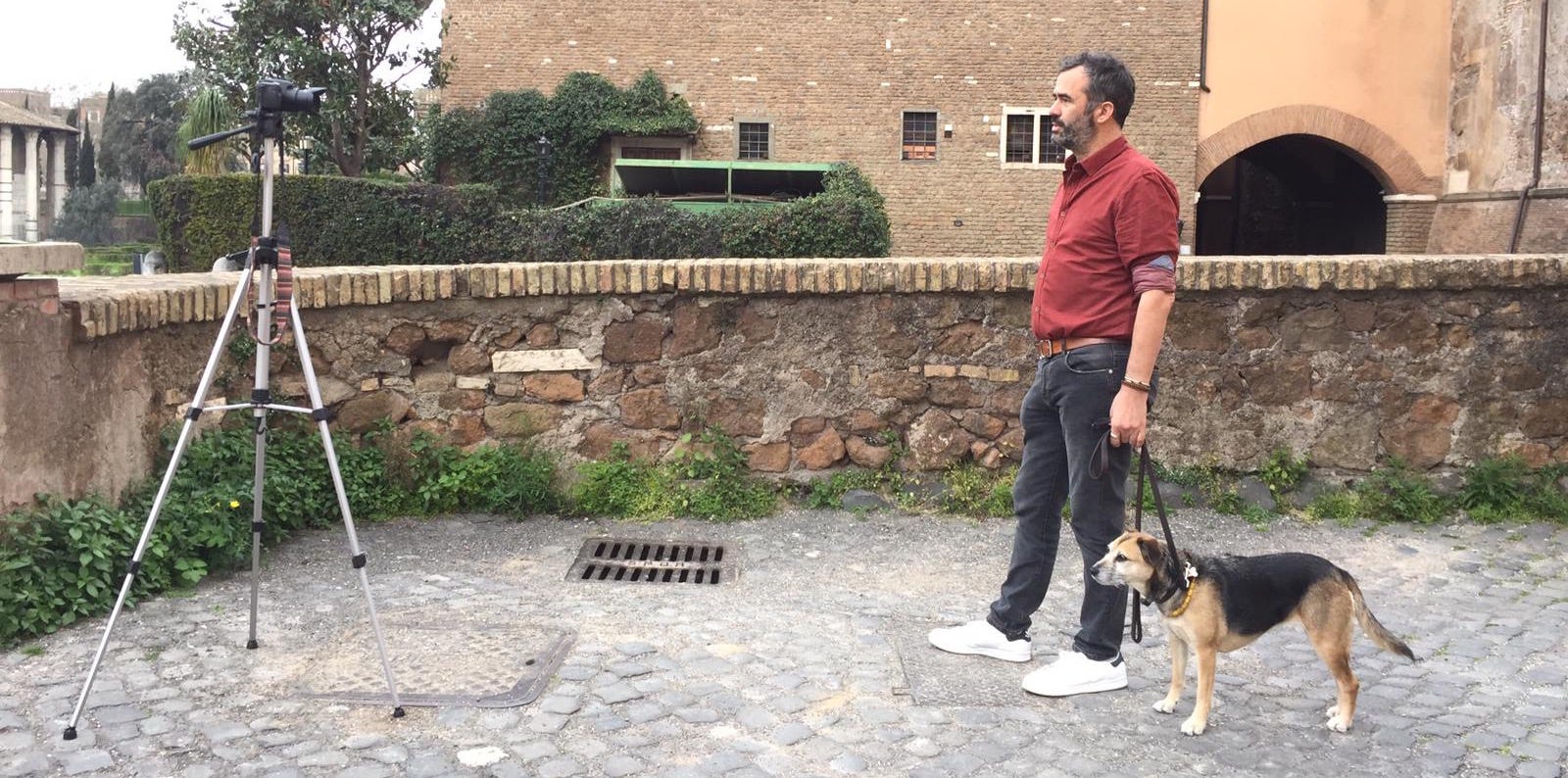
As a journalist, I was permitted to leave the house to report on events. But in two of my early trips out of the house under lockdown, I was stopped at the first checkpoint. Each time, the same officer stood at a distance and scowled at my media credential, looking back and forth between my face and the 12-year-old photo on the press card to determine if I was really who I said I was.
But before long, the human element returned. The officer stopped checking my press pass and began giving me an informal salute from across the street when I’d leave. “Americano!” he’d call out.
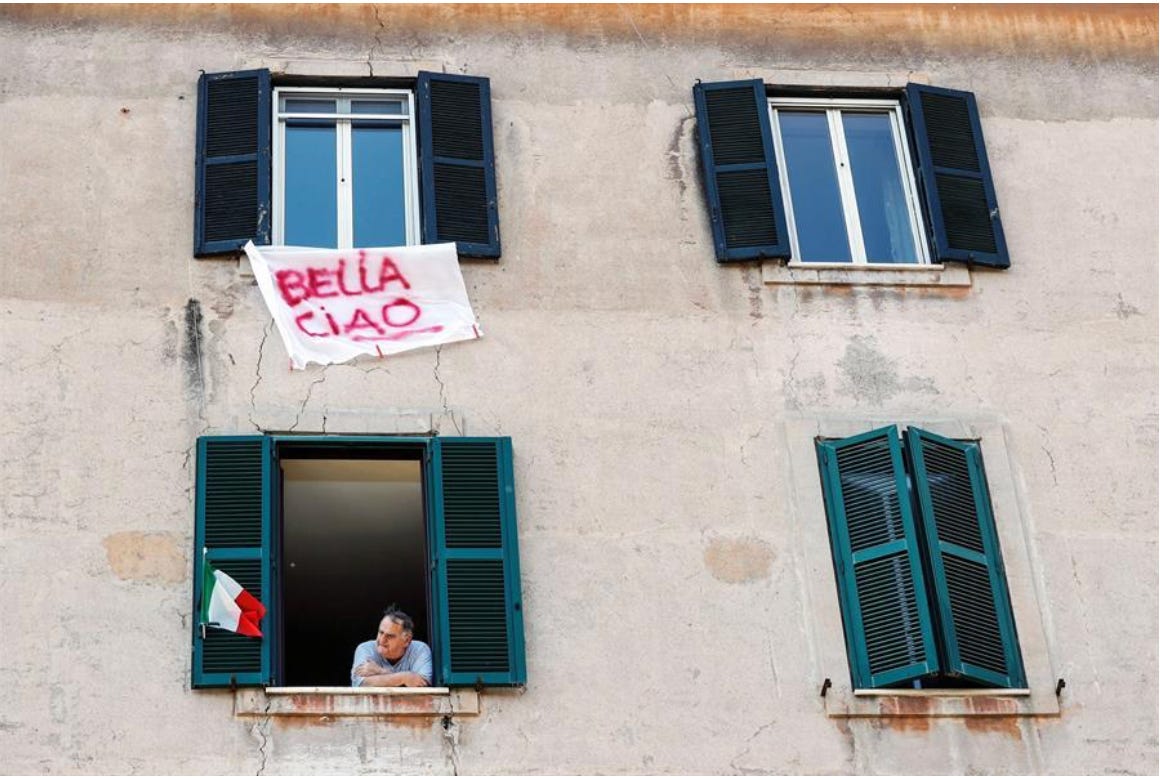
Teenagers in the building began ringing my doorbell to ask if they could “borrow” Mocha, who’d just turned six, to take her for a walk -- one of the few loopholes that allowed most people to leave the house to stretch their legs. Neighbors who for a time would avoid looking each other in the eye began leaning out their windows to sing Bella Ciao with each other. The song, an Italian anti-fascist anthem, became a hymn to a new kind of resistance.
The lockdown did not disappear for several more months. But familiarity was taking hold, and everyone began to understand which parts of the rules needed to be respected and which left room for discretion. At close range, the abstractions disappeared to reveal the humanity they’d obscured.
A Small Miracle?
I saw the same thing happen again in the far grander context of the Vatican.
Michael, an old friend with a serious neurological disorder, visited me in Rome and we decided to go to the Vatican. Michael could walk a few steps at a time, but for anything beyond that, he required a wheelchair.
We arrived by car, but were unable to find parking on the street, and a police officer with a whistle directed us toward the Terminal Gianicolo, a parking area outside the Vatican walls. I worried it would be difficult to push Michael’s wheelchair that distance. So, I pulled to one side, flicked on the hazard lights, and got out to ask the officer for help. He forcefully blew his whistle and repeatedly gestured for me to keep moving. He stared as I approached.
But when I got close enough to explain the problem, his demeanor changed. Within minutes, we were waved through a barrier and allowed to park adjacent to the Aula Paolo VI, steps from St. Peter’s Basilica. One of the Vatican’s Swiss Guards was waiting to let us in a side door.
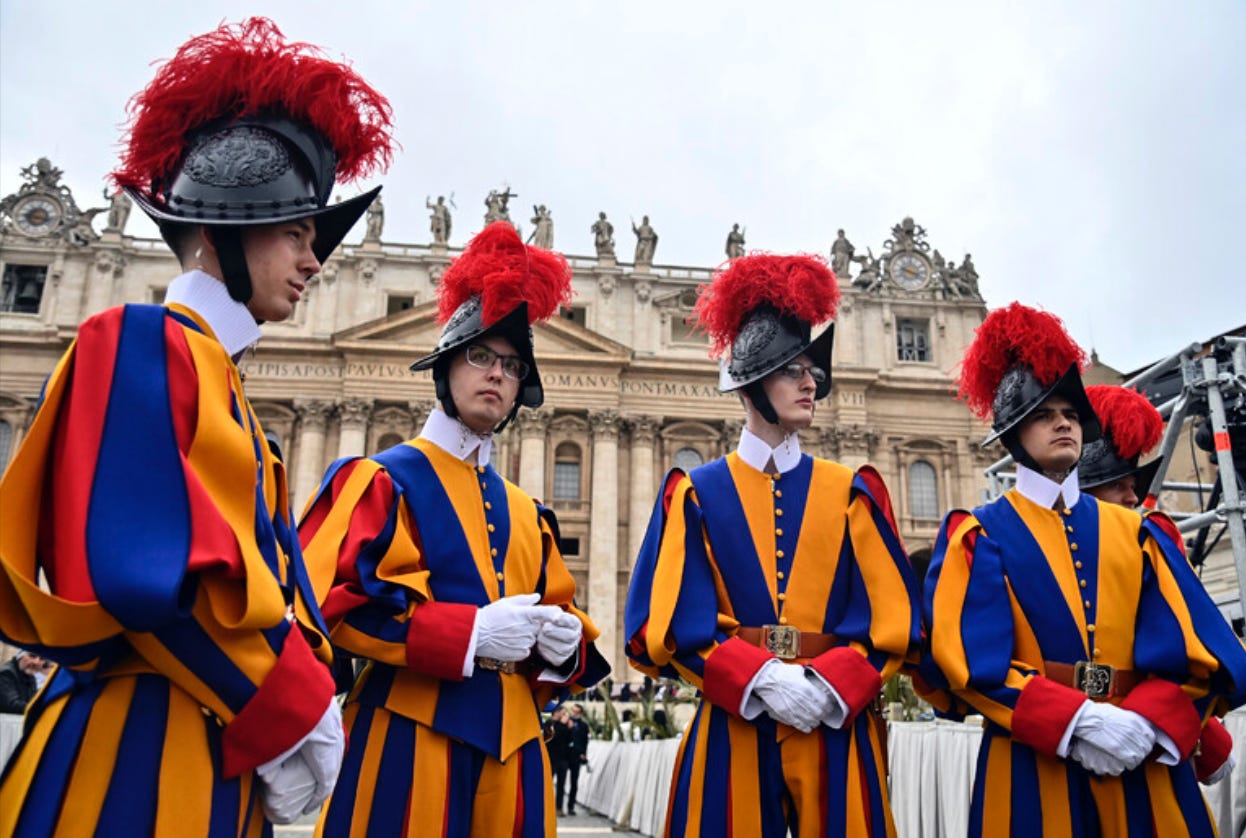
Even Michael, a Northern Irish Protestant with mixed feelings about the Roman Catholic Church, was wowed by the beauty and grandeur of the Vatican.
When it was time to leave, I couldn’t recall which door we’d come in. So, I pushed him to the regular exit so we could go out the front with the other visitors. Once there, I couldn’t find a wheelchair ramp in place, and I asked if Michael could walk down three or four steps to exit the basilica. He agreed.
So I pushed the wheelchair near a wall and Michael pulled himself up and leaned against it. I steered the wheelchair around him to go down the steps, and as I returned to his side, I saw a group of nuns who’d been following us out, stop and stare. “It’s a miracle!” one of them exclaimed.
It wasn’t a miracle. It was another example of how Italy works best at close range.
📌 And another thing
Longtime readers of this newsletter may recall a story from the frustrating process I went through to obtain my first permesso di soggiorno.
The anecdote involved a weary-looking civil servant with “wire-rimmed glasses and a rumpled jacket” who arrived a few minutes late on a Monday morning. But he didn’t get to work right away, and when I -- first in line that morning -- knocked on his door a couple of times to ask when I could present my paperwork, he erupted.
“I knew you weren’t Italian,” he barked at me, “because no Italian man would disturb another Italian man on Monday morning while he’s reading the soccer scores in La Gazzetta dello Sport!”
Based on my description, he was an easy person to dislike (and if you look at the comments, some readers certainly did).
What I didn’t say in the essay is that for months after finally receiving my permesso, I’d see him sometimes at a coffee bar near the Questura offices, which happened to be near my Italian school.
He was a different man outside the office.
He bought small packets of tissues from African men selling them outside the bar. Inside, he’d drink a glass of water in one long gulp before pouring two sugars into his caffè lungo. He’d crack jokes with the barista -- he had a talent for imitating regional accents -- and make biting comments about soccer commentators on the television. Once or twice, I saw him laugh so loud he’d have to remove his wire-rimmed glasses to dry tears with one of the tissues he’d bought outside.
I never spoke to him. We never even made eye contact. But like many things in Italy, he made more sense at close range.
Nota Bene: A quick note for regular readers -- The Italian Dispatch now has a paid subscription option. New posts remain free to read and discuss; the main change is access to the full archive. The newsletter is a reader supported project and if you’d like to find out how you can help make it sustainable, please click here for more information.
In some cultures people are cordial and correct from a distance but not so nice up close and There are some cultures where they don't let you get get close at all. I think Italy gets mixed reviews in some ways on a wide scale but who doesn't love the country close up??
Love these insights into Italian culture! Your writing is exquisite.