
The Maestro’s Accidental Friend
It took twelve years for me to understand a dedication written in Franco Zeffirelli's unsteady hand

“To Eric,” Franco Zeffirelli wrote on the title page of his just-published book, Francesco. Then he paused.
It was our second meeting, this one at his sprawling villa just off the Via Appia in Rome. Zeffirelli, then 91, was in a wheelchair.
We first met several years earlier at the Excelsior Hotel during the Venice Film Festival, where we had a long, friendly conversation about adapting Shakespeare for the screen. The key, Zeffirelli said, was to concentrate obsessively on one central theme. “Hamlet isn’t about reciting perfect lines like ‘To be or not to be,’” he said. “The story is about revenge, madness. You have to focus on that.”
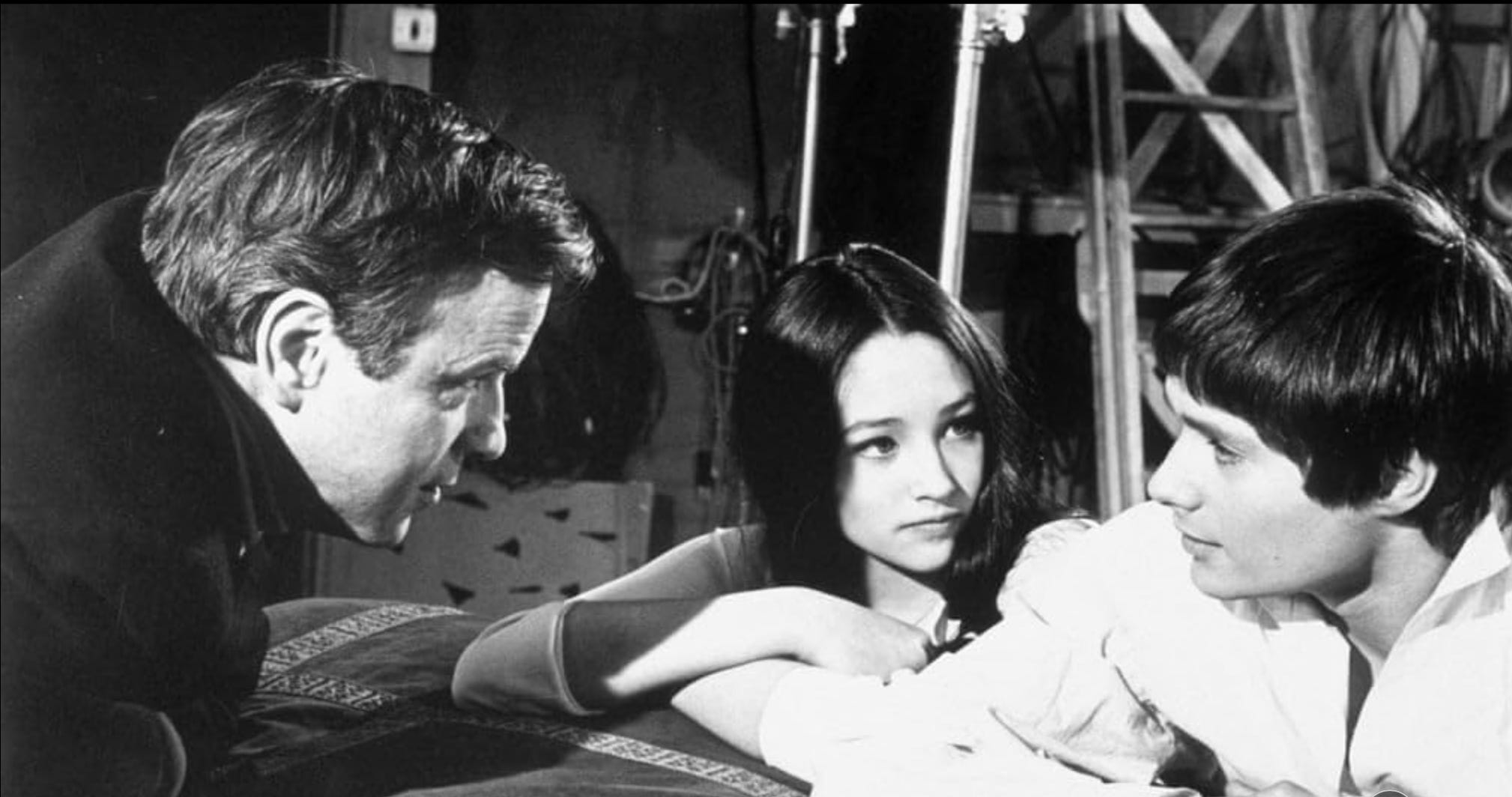
Zeffirelli would know. His 1968 Romeo and Juliet won two Oscars and may be the most acclaimed and commercially successful Shakespeare film adaptation ever made. He’d directed Elizabeth Taylor and Richard Burton in The Taming of the Shrew. He also staged operas around the world, and designed unforgettable stage sets and costumes. He was one of only a handful of Italians to have been awarded an honorary knighthood by Queen Elizabeth.
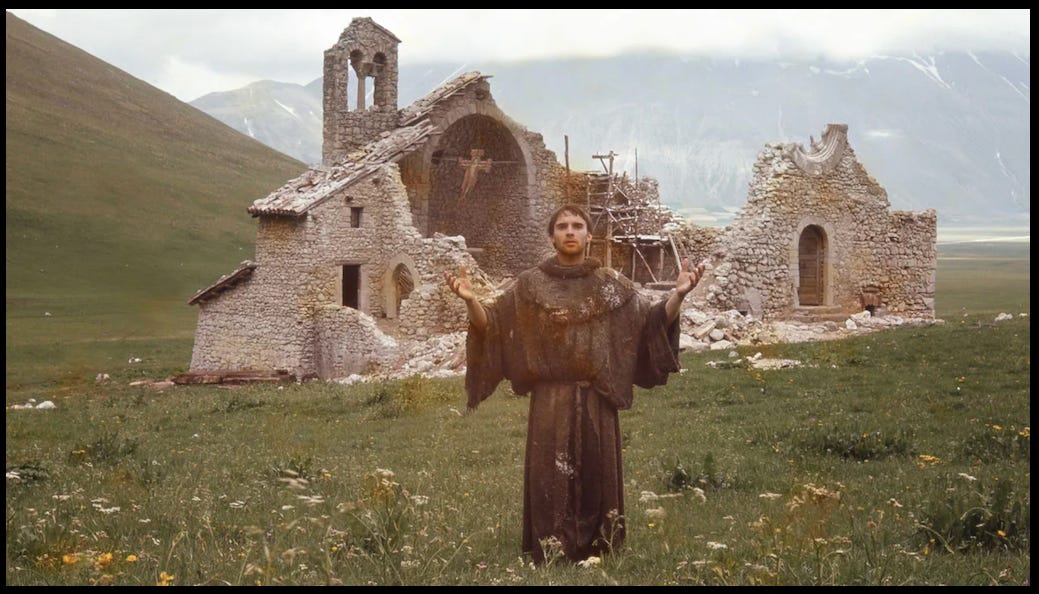
Twelve years ago, a few months after the election of Pope Francis, Zeffirelli published Francesco, a numbered, limited-edition coffee table book displaying never-released stills from his film Fratello sole, sorella luna (Brother Sun, Sister Moon), about the life of the new pontiff’s namesake, St. Francis of Assisi. The first copy would be a gift for the pope.
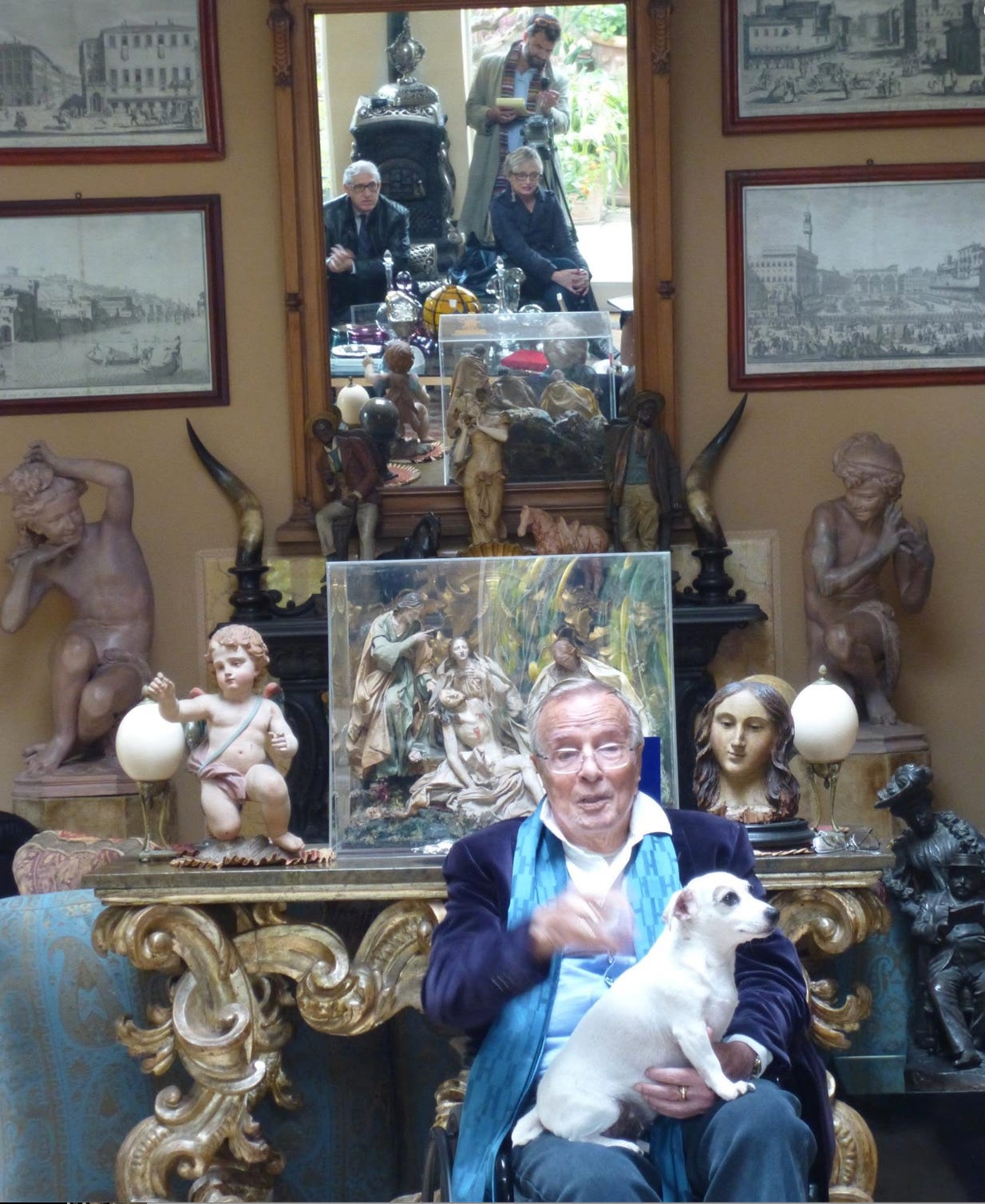
Zeffirelli held court for a few journalists from his wheelchair, sitting in his opulent, museum-like living room that was crowded with gilded consoles, classical nudes, religious figures, and Grand Tour-era engravings of Venice and Florence, where he was born. His beloved dog, Dolly, sat alert on his lap.
After discussing the book, he answered a few questions. What did he think about Paolo Sorrentino’s then-new Oscar-winning film La Grande Bellezza (The Great Beauty)? “I’m not particularly drawn to see it,” Zeffirelli said. Florence’s postmodern opera house? “Ugly.” Italy’s slowing economy? “Don’t ask me about that, I might faint.” And the queen, who was in Rome that day to meet the pope -- had she ever visited him? “No,” he said. “When I met the queen, I had to go to her.”
Then someone on his household staff asked which journalists wanted a copy of Francesco. I quickly raised my hand. And who wanted a personal dedication in their copy? Yes, yes, please.
When it was my turn, Zeffirelli asked me my name, I told him, and he wrote it on the page. Then I reminded him we’d met before in Venice, at the Excelsior, where we talked about focusing on a play’s central theme when interpreting Shakespeare for film. I told him I had fond memories of that discussion.
He glanced at me and I think I saw a look of recognition in his eye. Then he looked down again, placed the pen on the page and stopped.
A warm and foolish idea rose in my chest. I was making Franco Zeffirelli think. What would he write? How would he commemorate our small history?
But the pause stopped being meaningful and became uncomfortable. Finally, an assistant leaned in and put his hand on Zeffirelli’s shoulder.
“Maestro?”
Zeffirelli’s head snapped up. He’d been asleep.
He wrote a few words on the page and handed me the book with a kind smile. The assistant turned to the person behind me and said, “Next.”
The dedication was hard to read, and I only tried to decipher it for a moment. Soon, the last journalists were ushered to the parking area. Zeffirelli was tired.
The anecdote would occasionally come up in conversation over the years and in my telling of it, he wrote something kind but conventional. “With warm regards,” maybe, or “Polite salutations.” Oddly, I never made a serious attempt to read it until preparing for this essay.
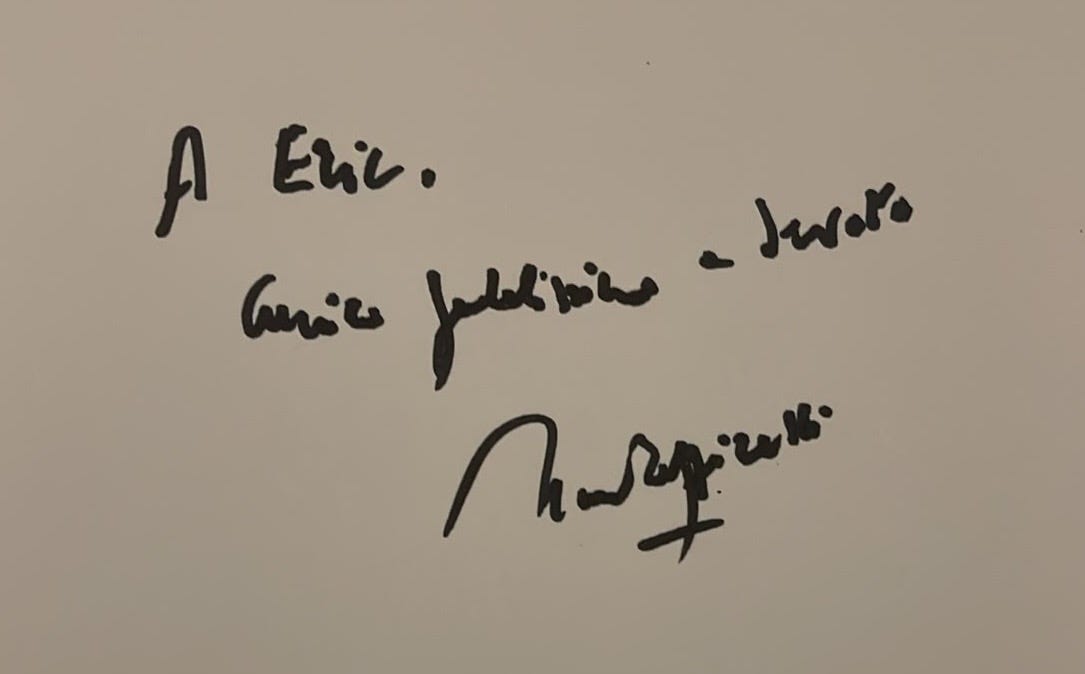
Now, a dozen years later, with help from a couple of sharp-eyed friends, I can make out Zeffirelli’s unsteady hand:
A Eric, amico fedelissimo e devoto.
To Eric, a most faithful and devoted friend.
It’s signed simply, “Zeffirelli.”

Nota Bene: With this one, The Italian Dispatch has reached 60 essays, each with a different cliché-free take on Italy, all of them written with open eyes, great affection, and a steady hand. If you’re willing to support the newsletter going forward, click here to learn how.
A perfect dedication!
What a treat to be Zeffirelli's faithful and devoted friend, even for a moment. He was a great genious, even more for opera and theratre than for film. It was a great privilege.