
✍️ Italy Explained
A foolproof handbook a day early, because why waste time?

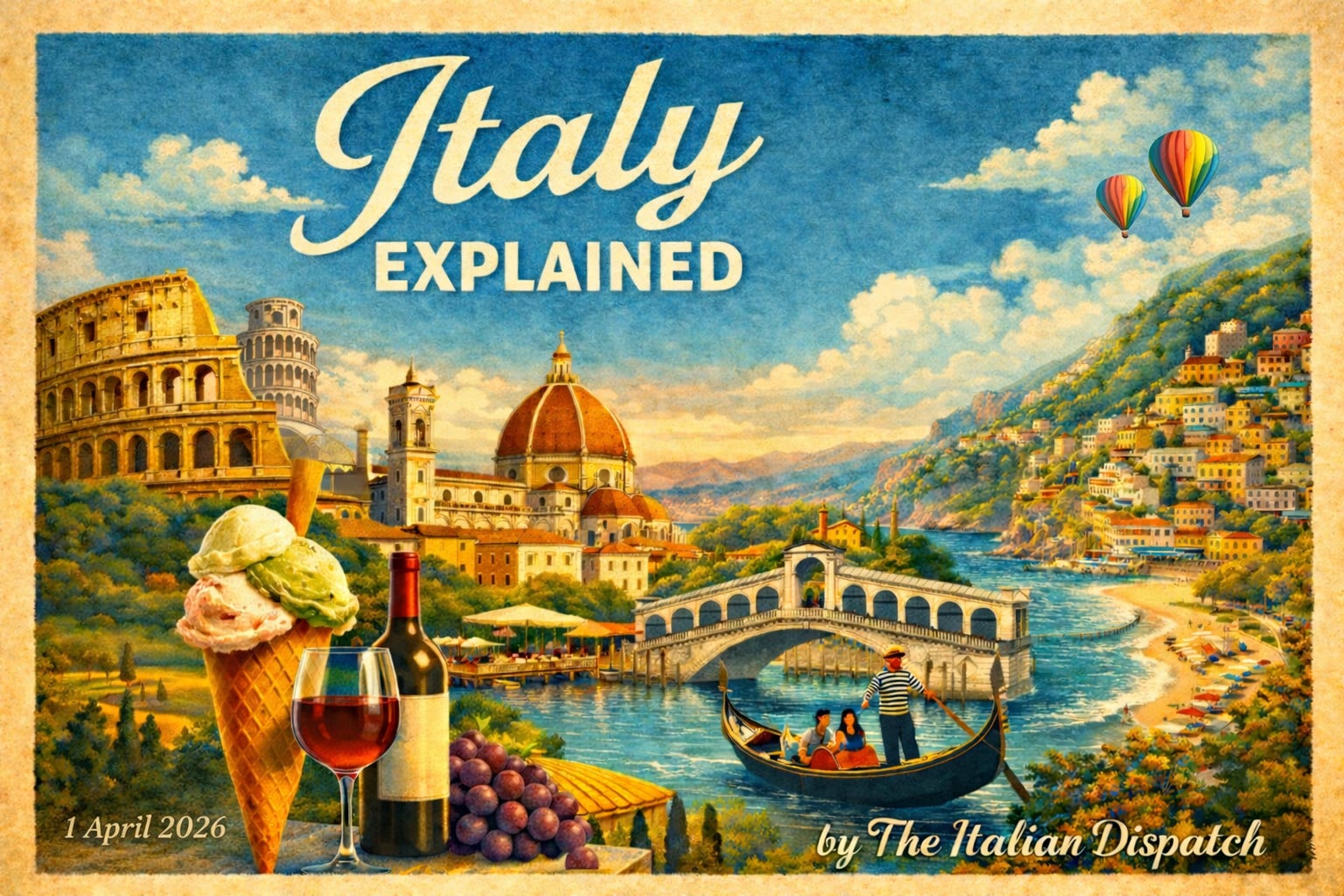
The biggest mistake most travelers make in Italy is wasting time.
You can’t blame them; it’s easy to get distracted. There’s always another church beyond the one you read about, another piazza around the corner, some hole-in-the-wall coffee bar full of locals. There are villages nobody’s heard of, and unpronounceable dishes listed on osteria menus.
It’s a lot to take in.
Anyone who’s been to Italy more than once or twice will want to tell you about a “secret” wine bar they discovered or an out-of-the-way church with faded frescos painted by some forgotten artist. By all means, take a moment to politely nod and listen. But then ask one of the uncontestable questions: Is there an ancient building as impressive as Rome’s Pantheon? A bridge as magnificent as the Rialto in Venice? Does Florence offer a finer statue than Michelangelo’s David?
I’m not the first to say it, but that doesn’t make it less true: these places are famous for a reason. Nobody ever regrets visiting them. The mistake is letting lesser options get in the way.
Italy has something like 5,000 museums and monuments, nearly 6,000 collinari -- hilltop villages. There are 100,000 protected historical sites and another 100,000 churches. Places to eat? The country has more than 350,000 restaurants and cafes.
Can anyone know all of them? Of course not. Someone visiting one Italian church a day would have had to start in 1750 to be finished by now. To have tried every restaurant, they’d have had to begin more than 200 years before the founding of Antica Trattoria Bagutto, which claims to be Italy’s oldest eatery, tracing its roots back to 1284.
But can someone figure out which are the museums, villages, sites, churches, and restaurants worth visiting? Yes!
Anyone who arrives in Italy tomorrow will follow a path laid out by millions of previous visitors -- many of whom wrote books and poems about their experiences, left easy-to-access online reviews and tips, and published photos of their food and of themselves at the most popular spots -- all so that later visitors can follow in their exact footsteps. It would be a waste not to.

The fewer on-the-ground decisions you make, the better. Every choice takes time: where to eat, what place to visit, which route to take. Losing a few minutes each time adds up faster than you think.
But that can be resolved with smart planning. More and more restaurants allow online booking weeks or even months in advance. Websites for state-run museums now allow tickets to be booked up to a year ahead. Smartphone GPS apps chart the quickest route between places, eliminating unnecessary detours. Why leave anything to chance?
I chuckle when people say they want to “live like a local.” Really? It’s kind of silly if you think about it: locals aren’t on vacation. They’re running errands, going to work, living their lives. The country even has one of the lowest social media use rates in Europe. How much do you think residents (bless their hearts) worry about getting just the right photo or video clip?
Just focus on what brought you to Italy -- the real Italy -- in the first place.
The true essentials are well known: pizza and lasagna, a straw-basket Chianti, a mandolin player, an “I ♥ Roma” tee shirt, music from Andrea Bocelli bellowing from a speaker, and, when the season is right, a generous serving of pesce d’aprile.
* * *
Click here to access The Italian Dispatch’s exclusive guide to the five best selfie spots in Rome, tips on finding restaurants with photos on their menu, and a cheat sheet for faking it in Italian.

Cruel to post this on March 31st.
ahahahahahahaa!!! It took me a few paragraphs ... but what a laugh. Well done, Mr. Eric