
The Second Invasion
Blue crabs are devouring Italy’s clams. American tipping culture is eating away at something else

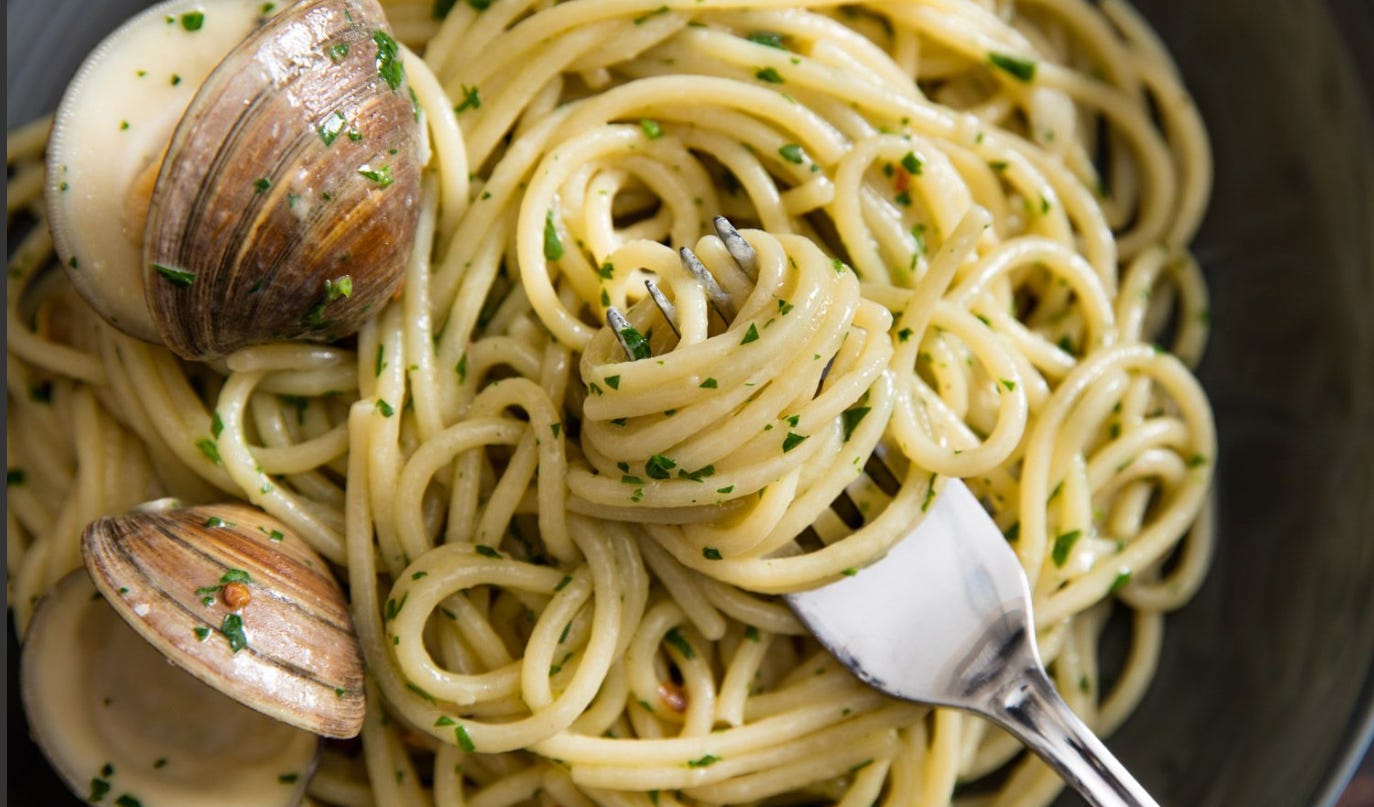
Spaghetti alle vongole
If you have a weakness for spaghetti alle vongole, let me give you a tip1: order it this summer as often as you can. The vongole -- clams -- are disappearing from Italian waters, and they’re disappearing quickly. Who knows how many summers they have left?
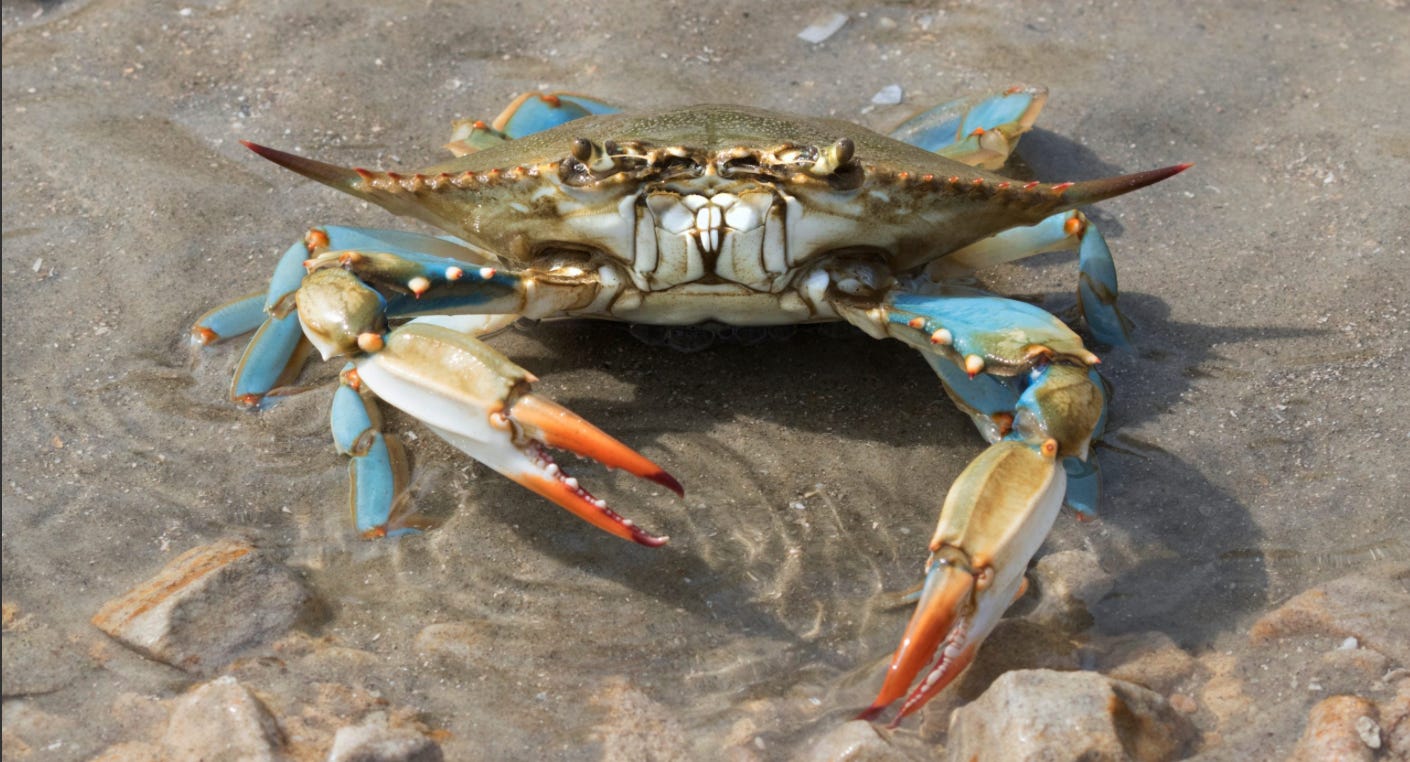
Why? Mostly because of the Atlantic blue crab, an unintended import that arrived in Italian waters via container ships that picked them up in ballast from the U.S.’s east coast.
With warmer seas and few natural predators, the northern Adriatic Sea has been a paradise for the crabs, and, in 2023, their population exploded. Their powerful claws tore through fishing nets and damaged traps, they fed on fish eggs, and, most seriously, they cracked open oysters, mussels … and clams.
Production of vongole veraci -- the most prized type of clam -- fell from nearly 22,000 tons in 2023, to just under 6,000 in 2024, to around 2,000 last year, and perhaps less than 1,000 tons this year.
The Italian government has responded in the most Italian way possible: encouraging people to eat the vicious little creatures and creating a new government bureaucracy to study the situation.
Regardless, the crabs seem to be here to stay.

Waving off the change
At a recent lunch, the blue crab invasion came up in conversation. That’s when fellow Substacker, Eric Beall from Life Lived Italian, made a quip that helped inspire this essay.
“An unwanted American import that’s changing the way we eat out in Italy?” he asked. “Sounds like tipping.”
He has a point. Both the crabs and tipping culture traveled to Italy from the U.S. and have gained significant footholds in recent years. Both threaten long-standing traditions.
And tipping culture is the one that worries me more.
When I first wrote about this topic in The Italian Dispatch last year, the newsletter was reaching only a few dozen subscribers. So, I’ll briefly revisit the main points here.
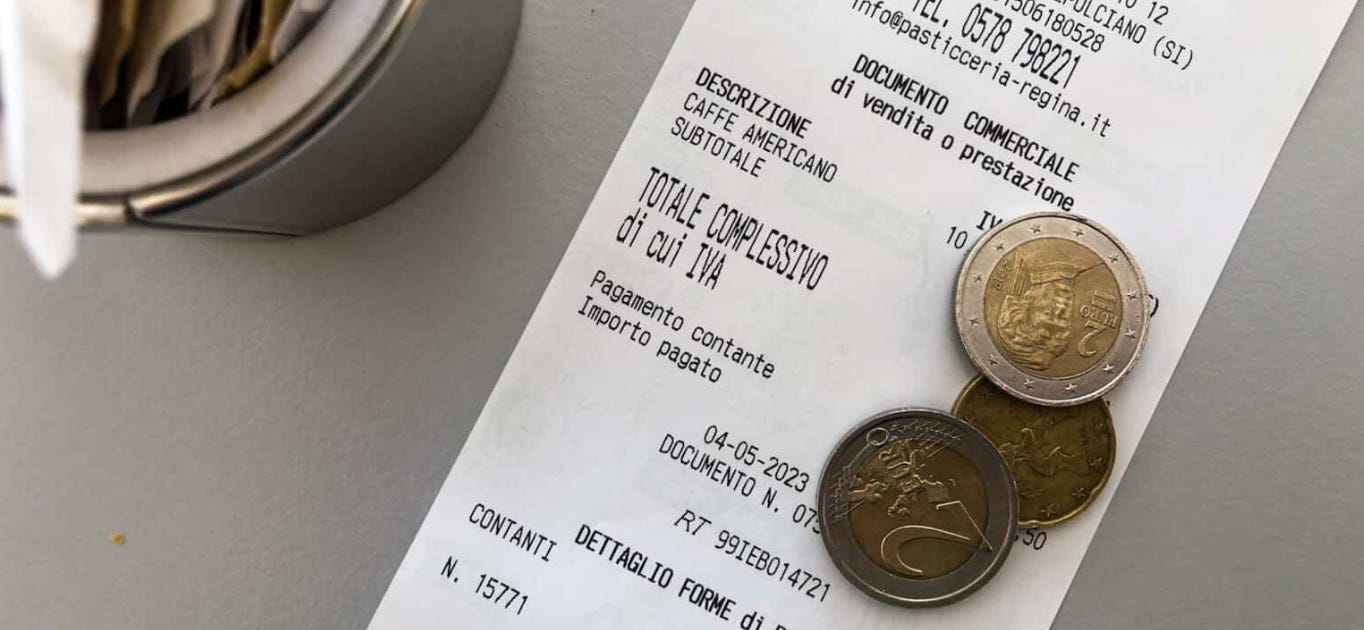
I’m not against tipping. A folded banknote pressed into a server’s hand, a few coins left on a table, waving off the change after lunch -- those are gestures, and gestures are not the problem. I do it when the occasion calls for it.
What I oppose is the tip becoming something expected -- that’s the moment it stops being generosity and becomes arithmetic. It ceases to be something you give and becomes something you owe. Once entrenched, it doesn’t go away.

Chipping away
In the past, when I’ve made this point, some newsletter readers pushed back2: what’s the harm in borrowing from another culture? What’s wrong with being generous to the person who brought you your meal? Italian food culture is strong enough to survive it.
I agree with the premise, but not the conclusion.
Italian food culture is resilient. But cultures don’t disappear with a single blow. They’re chipped away a little at a time, one reasonable-sounding concession after another.
I love the way the U.S. and Italy have shaped each other’s cultures over the course of generations. But this is one of the areas where I want to draw the line because I know what’s on the other side: the U.S. already lives there.
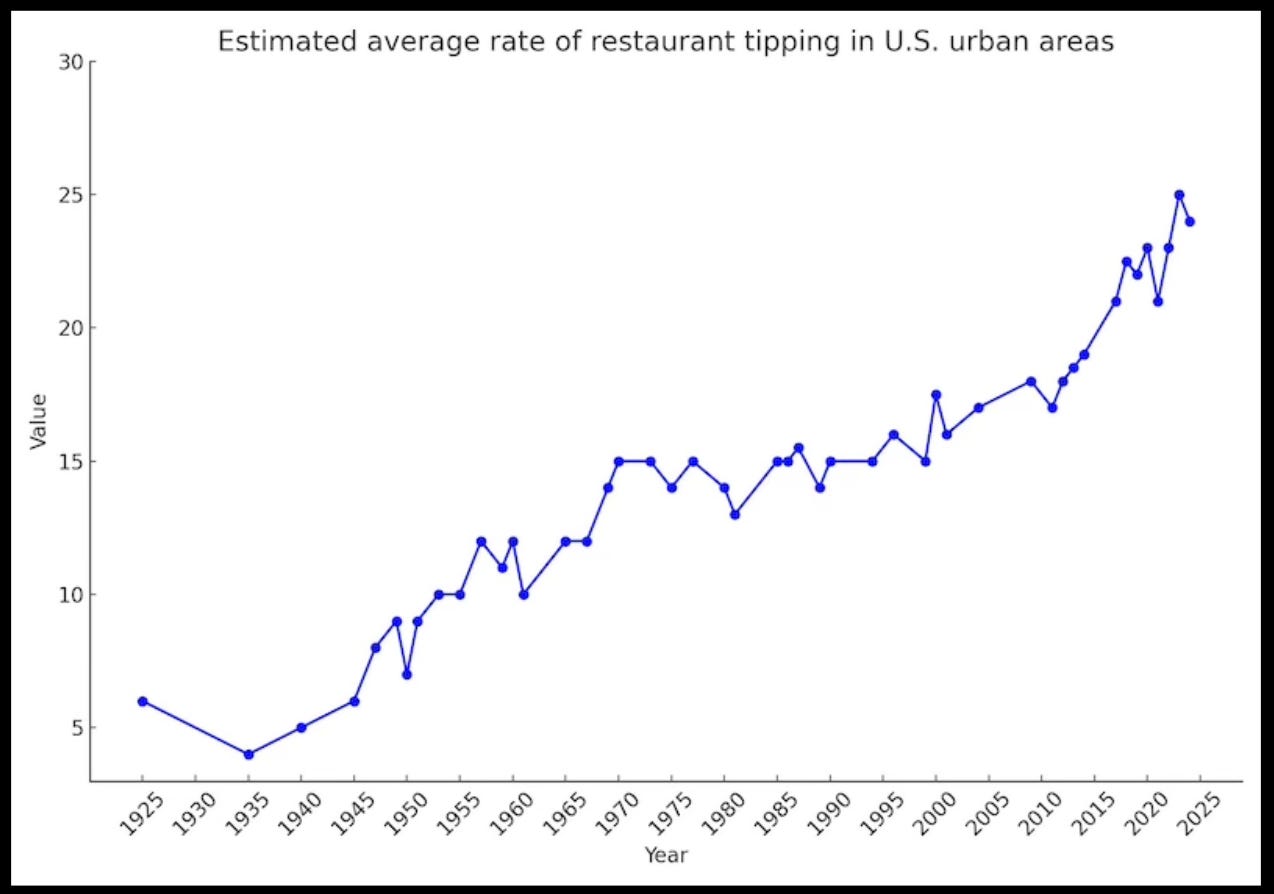
With occasional exceptions, food service there can seem like an elaborate dance to increase the bill and the tip. There, the waiter benefits when you order the more expensive bottle or two appetizers because you couldn’t decide.
It also encourages a style of service -- chatty, flattering, relentlessly attentive -- that is emerging in Italy along with tipping.
In comparison, Italian restaurant service can seem brusque. The server answers questions, takes the order, brings the food, and mostly leaves the table alone. Don’t expect them to introduce themselves, squat beside the table like an old friend, or return repeatedly to ask if everything was delicious. They’re doing a job, not auditioning for a customer’s approval.
I know the Italian system isn’t flawless. Like most blue-collar workers in Italy, restaurant workers are usually underpaid. The hours are brutal. Often, staffers are paid under the table. I won’t romanticize any of that. But asking the customer to pay the server’s wages in addition to the cost of the meal doesn’t solve those problems.

The choice
The first blue crab was recorded in the Adriatic Sea, near Trieste, just after World War II, around the same time Italy was absorbing rock ‘n’ roll, large supermarkets, orange Fanta, and the first waves of post-war U.S. tourists who brought American-style tipping habits with them.
For decades, the blue crab and tipping culture remained at the margins. The crabs occasionally showed up in fishing nets, while restaurant staff treated unusually large tips as unexpected windfalls. Neither seems likely to change much.
Then conditions changed. Warmer seas made the Adriatic more hospitable to the Atlantic blue crab. And mass tourism -- along with travelers unfamiliar with local customs, contactless payments, and now payment screens with pre-programmed tipping options -- is making Italy more hospitable to American-style tipping.
Both were already here; they just needed the right environment to spread.
One may now be beyond our control. But the second is still a choice.
📌 And another thing
There’s a complication hiding inside the plate of spaghetti alle vongole I suggested you savor this summer.
The disappearing vongole veraci Italian chefs crave and that is being destroyed by the spread of blue crabs is itself an invasive species native to the Philippines. In fact, in most of the world, they’re called Manila clams. In this case, they were introduced on purpose in the 1980s because they matured faster and were more resilient than native Italian clams.
Which is to say that the vongole veraci being devoured by the new American invader are themselves invaders -- just ones that arrived earlier, behaved better, and lasted long enough to become “traditional.” Give the blue crab 40 years and a good PR team and who knows what we’ll be calling it?

Nota bene: This is the second time I've written about tipping in Italy here, and one day I'll probably write a third. The Dispatch is a running argument for the Italy that isn't for sale and that a meal is hospitality, not a transaction. Paid subscribers get all of it: nearly 60 essays in the archive, plus a monthly digest of recent posts and the best of your comments. Come join.

A very special thanks to Wendy Holloway from Flavor of Italy for organizing the delicious lunch where the blue crab-slash-tipping conversation took place. Wendy has discussed the culinary side of the blue crab saga in her podcast.
Pun intended
I am thrilled when readers push back
Re blue crabs: and here on the US east coast, crab populations are declining! We recently pad $90 for 10 cleaned (raw) crabs. They are a popular summer food, and have become scarce. Italian-Americans use them whole, cooked in a in red sauce that goes over spaghetti. (Then you pick the crabs while chatting and drinking wine) Delicious! I'm sure the resourceful Italians will soon start eating them by the ton.
Tipping becoming an expectation also enables (further) exploitation of workers by bosses; see “tipped wages” in the US